
Relevance of the Educational Programme
The transition towards environmentally sustainable development is a key component of the national environmental strategy of the Republic of Kazakhstan. One of its priority areas is environmental education, which includes both raising environmental awareness in civil society and training qualified professionals to address environmental protection challenges.
In this regard, there is an increasing need to train chemistry specialists who can work alongside environmental professionals to conduct effective environmental monitoring and manage the risks associated with environmental crises. Understanding environmental problems and ways to address them is also essential because the rational use of natural resources and effective environmental protection measures are possible only through knowledge of the laws of nature and their responsible application.
Languages of instruction: Russian and Kazakh.
Objective of the Educational Programme
To train a new generation of specialists possessing professional skills in protecting the environment from the harmful effects of chemical substances. Graduates will be qualified to monitor the activities of industrial enterprises that have a significant environmental impact and to conduct environmental and analytical work aimed at optimising the large-scale use of active substances in industrial processes and household chemicals.
Degree Awarded
Bachelor of Natural Sciences in the Educational Programme 6B05303 “Environmental Chemistry and Sustainable Development”.
Career Opportunities
Graduates may work in the following positions:
- Chemical engineer;
- Environmental design specialist;
- Sampling technician;
- Chemical analysis laboratory technician;
- Environmental laboratory technician;
- Environmental chemist;
- Environmental manager;
- Environmental protection specialist.
Fields of Professional Activity
All sectors of the economy, industry, agriculture and municipal services, production and consumption sectors, government environmental protection authorities, and environmental services.
Objects of Professional Activity
- Academic and specialised research institutes;
- Manufacturing enterprises, companies, and chemical analysis laboratories;
- Internal affairs bodies and forensic laboratories;
- National, regional, and municipal government authorities;
- Environmental education centres;
- Environmental and chemical analysis departments of enterprises and institutions.
Types of Professional Activity
- Organisational and managerial activities;
- Innovation activities;
- Production and technological activities;
- Experimental and research activities;
- Service, operation, and maintenance activities;
- Other related professional activities.
Functions of Professional Activity
- Collecting and analysing information on the technological activities of industrial enterprises;
- Conducting laboratory research, identifying critical concentrations of chemical substances, and monitoring the overall condition of water, soil, and air in a particular area;
- Developing measures to reduce environmental risks arising from industrial activities, as well as developing and optimising production technologies at chemical plants;
- Conducting research into the environmental impact of the widespread use of household chemicals;
- Carrying out inspections and monitoring activities at hazardous and harmful production facilities.
Educational and Laboratory Facilities
Digital Laboratory of Environmental and Industrial Safety
The laboratory conducts academic and research activities in the fields of environmental, industrial, and chemical safety. It supports academic courses and all types of practical training within educational programmes, as well as modules of general education disciplines. The laboratory also provides professional development courses.
Laboratory of Radiation and Biological Safety
The laboratory conducts academic and research activities in the fields of occupational radiation and biological safety and public safety. It supports academic courses and all types of practical training and provides professional development courses in radiation and biological safety.
Laboratory of Environmental Protection and Rehabilitation
The laboratory conducts academic and research activities in the fields of ecosystem protection and restoration, air, water, and soil quality, land reclamation, waste disposal, and other related areas. It also carries out environmental monitoring of natural environments and urban areas.
The laboratory supports academic courses, all types of practical training within educational programmes, and modules of general education disciplines. It also provides professional development courses in ecology and sustainable development.


Career Guidance Activities
On December 5, 2024, D. Serikbayev East Kazakhstan Technical University hosted a round-table discussion entitled “Foundation Programme – University – Enterprise.” The event brought together Foundation Programme students, representatives of D. Serikbayev East Kazakhstan Technical University, and environmental specialists from the region’s leading enterprises.
The event was organised as part of career guidance activities for the 6B05303 “Environmental Chemistry and Sustainable Development” educational programme. One of the most important challenges facing Kazakhstan on its path towards sustainable development is the training of highly qualified specialists capable of addressing industrial problems in a systematic and comprehensive manner.
Invited guests:
- A.N. Tauyrbekov — Head of the Department of Ecology of the East Kazakhstan Region;
- D. Sovetkhanov — Leading Specialist and Environmental Expert at Asian Environmental Audit Company LLP;
- D.N. Mukhamedkarimov — Environmental Specialist at Ust-Kamenogorsk CHP Plant LLP;
- Representatives of Atmosfera Laboratory LLP;
- A.N. Manabayeva — Leading Specialist of the Environmental Protection Division within the Occupational Health, Environmental Protection and Industrial Safety Department of Ust-Kamenogorsk Titanium and Magnesium Plant JSC;
- Foundation Programme students.


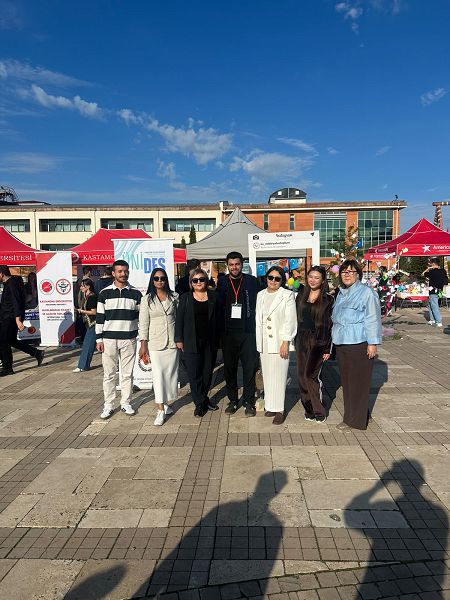
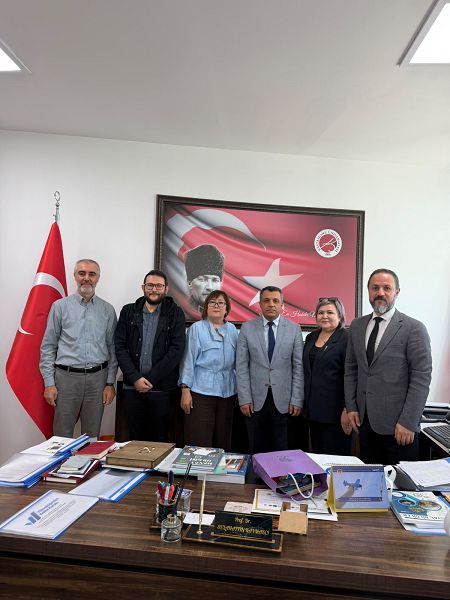
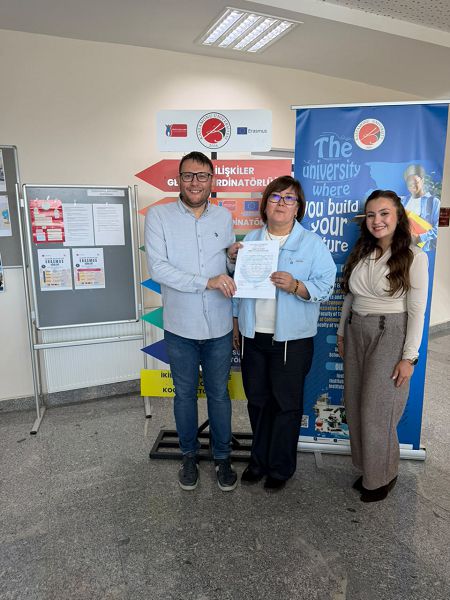
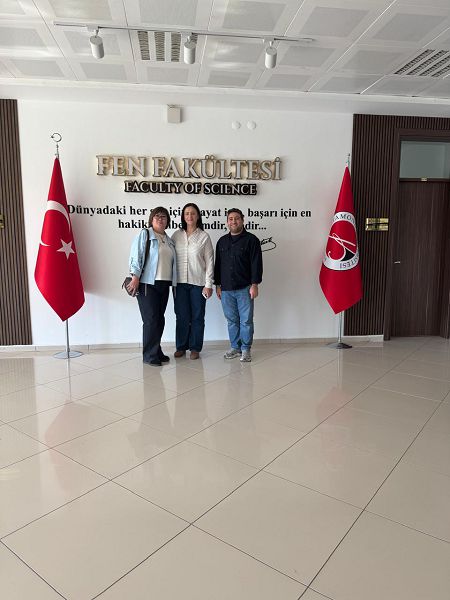
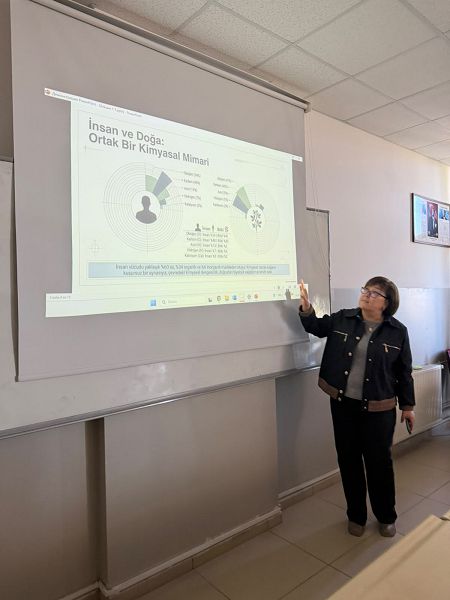
Associate Professor of the School of Earth Sciences, Manira Krykbayevna Zhamanbayeva, completed an academic internship at Kastamonu University in the Republic of Türkiye from 5 to 16 October 2026 within the framework of the Orhun Exchange Programme.
The Orhun Exchange Programme is an important international initiative aimed at strengthening academic cooperation among higher education institutions in the Turkic world, facilitating the exchange of professional experience among academic staff, and expanding scientific collaboration.
During the internship, Manira Zhamanbayeva exchanged professional experience with the academic staff of Kastamonu University and became familiar with modern approaches used in teaching and research. The participants also discussed current issues in the field of Earth sciences, opportunities for conducting joint research, and prospects for the further development of academic partnerships.
As part of the academic visit, professional meetings were held to discuss the improvement of educational programmes, the exchange of research experience, and the implementation of future joint projects. The internship laid the foundation for expanding international cooperation and strengthening research ties between the institutions.
The academic internship at Kastamonu University contributed to the integration of national education and science into the international academic community and created opportunities for the development of new scientific projects and joint research initiatives.
Participation in international programmes of this kind enhanced the lecturer’s professional qualifications, strengthened the university’s international reputation, and expanded scientific and educational cooperation among Turkic countries.
For the School of Earth Sciences, the internship represented an important step towards incorporating international experience into the university’s educational and research activities.
23.10.2026
