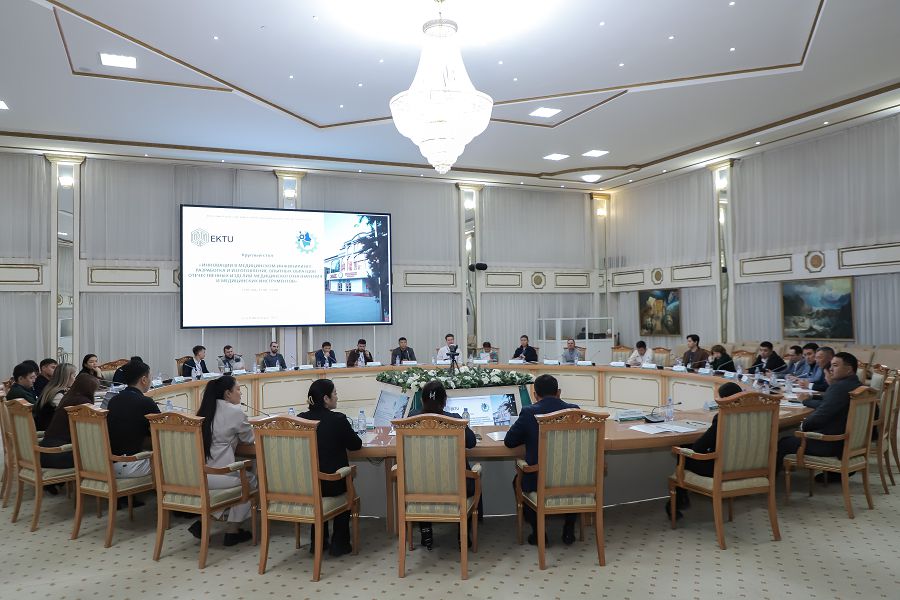
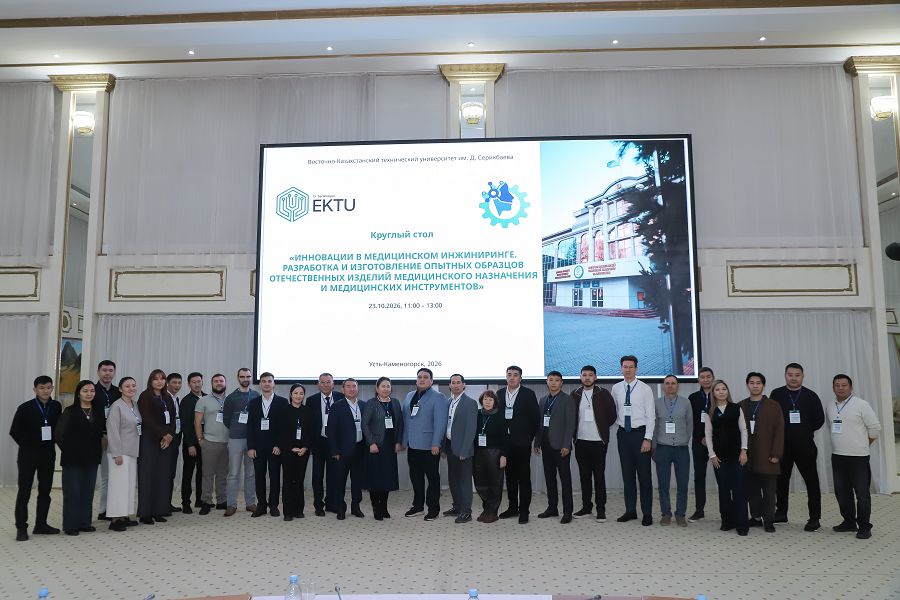
On 23 October 2026, D. Serikbayev East Kazakhstan Technical University hosted the concluding roundtable, “Innovations in Medical Engineering. Development and Manufacture of Prototypes of Domestically Produced Medical Devices and Instruments.” Scientists, engineers and medical practitioners discussed research and prototype manufacturing results, as well as prospects for applying these developments in healthcare.
The event focused on the results of Project BR24992786, “Development of Manufacturing Technology for Samples of Domestically Produced Medical Instruments and Devices,” being implemented in 2024-2026 under the program-targeted funding scheme of the Ministry of Science and Higher Education of the Republic of Kazakhstan.
The event brought together more than 30 representatives of the scientific and medical communities from Kazakhstan and abroad. Participants included staff from EKTU, Semey Medical University, Karaganda Medical University, the National Scientific Center for Traumatology and Orthopedics named after Academician Batpenov, the University of Zagreb (Croatia) and Texas A&M University (USA), as well as specialists from healthcare organizations in the East Kazakhstan Region.
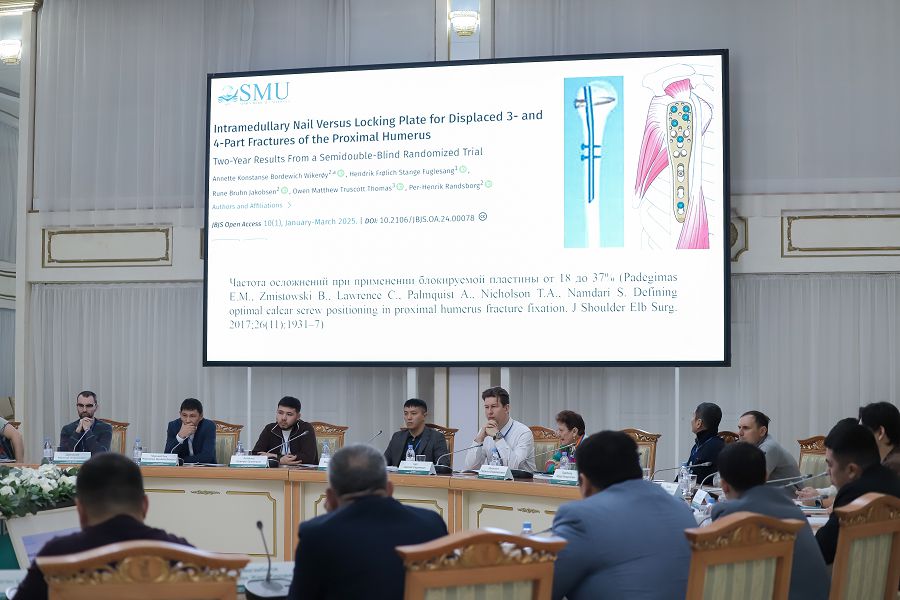
Clinical challenges in medical device development were a major topic of discussion. A.S. Musabekov presented work on a new plate for the fixation of proximal humerus fractures, including its biomechanical rationale and clinical trials. E.N. Shaukhin and N.K. Mursalov devoted their presentation to an innovative implant for clavicle fracture fixation. M.Zh. Aimagambetov and A.E. Masalov from Semey Medical University discussed developments in surgery, while E.A. Myrzakhanov spoke about the use of laser technologies in minor proctological procedures.
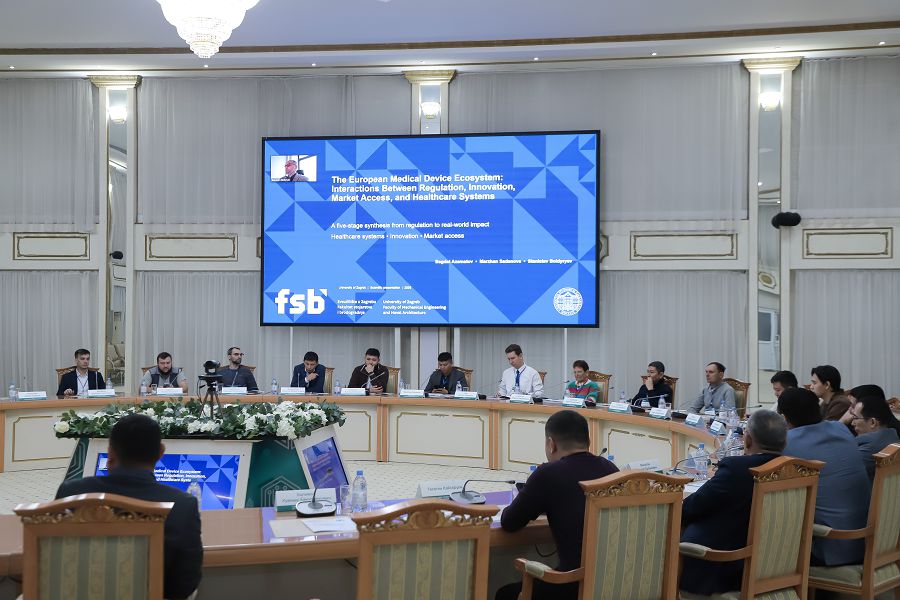
S. Boldyryev from the University of Zagreb shared international experience. His presentation addressed the relationship between regulation, innovation and market access for medical instruments in Europe. N.A. Beisekenov, a PhD student at Texas A&M University, presented the digital design of Ti-6Al-4V titanium alloy lattice structures using generative neural networks, computer-aided design and finite element analysis.
EKTU researchers presented technological aspects of medical device manufacturing. B. Maratuly and Zh. Mukhametbek, research engineers at the Smart Engineering Competence Center, presented technologies for securing antibacterial coatings to medical textiles and controlling their quality, as well as technologies for machining medical devices using computer numerical control (CNC) machines.
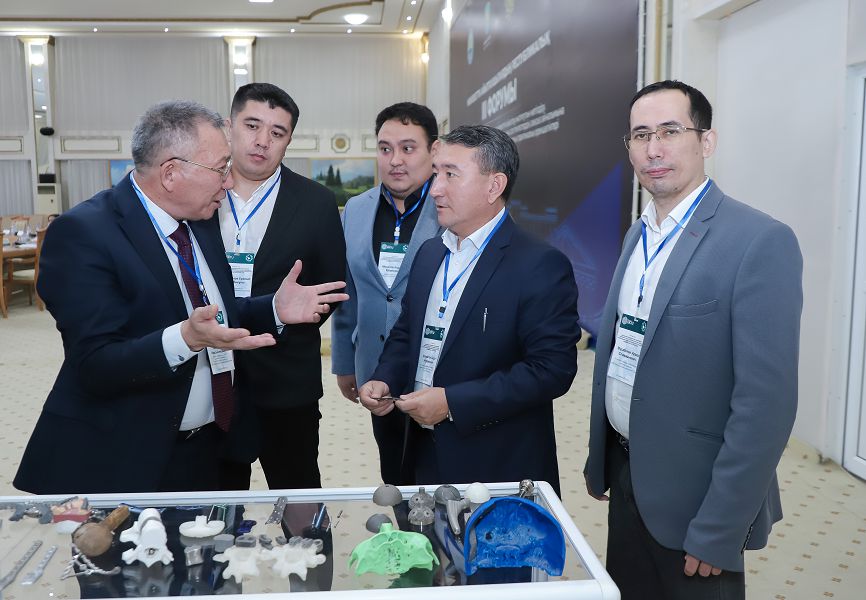
In his presentation, project leader B.N. Azamatov reviewed the three years of project implementation and presented the main scientific and practical results in technology development and the manufacture of prototypes of domestically produced medical instruments and devices. The practical part of the program featured a demonstration of samples manufactured at EKTU’s Smart Engineering Competence Center. This gave participants an opportunity to examine the developments and discuss them with the university’s scientists and engineers.
At the close of the roundtable, participants expressed interest in continuing joint research and strengthening cooperation between the engineering and medical communities. Further collaboration involves improving domestically produced medical devices to meet the needs of clinical practice and advancing their manufacturing technologies.