Laboratory of Rock Physics and Processes
Objective
To develop and implement scientifically grounded methods for investigating the physical, mechanical, and deformation properties of rocks using modern laboratory equipment, in order to enhance the reliability, stability, and safety of mining engineering structures, as well as to optimize technological processes in the mining industry.
Objectives / Tasks
Development of sample preparation methodologies for rock specimens to conduct laboratory testing under various loading conditions.
Investigation of the physical and mechanical properties of rocks (strength, deformation, elastic, and petrophysical characteristics) under uniaxial and triaxial compression.
Study of rock behavior patterns through modeling of stress-strain states of the rock mass.
Conducting indirect tensile and hydraulic fracturing tests to assess crack resistance and rock failure.
Development of scientific foundations for predicting the stability of rock masses based on experimental data.
Implementation of automated testing systems to improve the accuracy and reproducibility of results.
Justification of engineering solutions in geomechanics to enhance the safety of mining operations.
Laboratory Activities
The Laboratory of Rock Physics and Processes specializes in fundamental and applied research in the fields of geomechanics, rock mechanics, and the assessment of the stress-strain state of rock masses.
The primary objective is to obtain reliable experimental data on the behavior of rocks under various loading conditions.
Sample Preparation
The laboratory uses a specialized set of equipment for preparing rock specimens, ensuring the production of samples with the required geometry and precision.
The set includes:
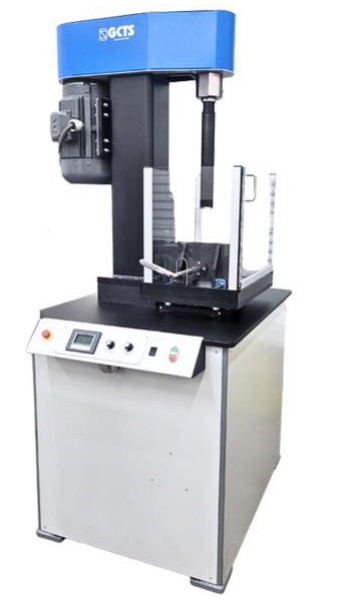
- core drilling machine;
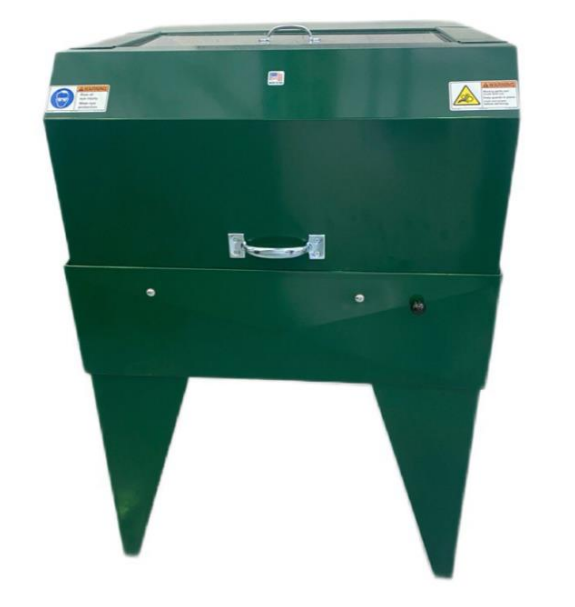
- cutting machine;
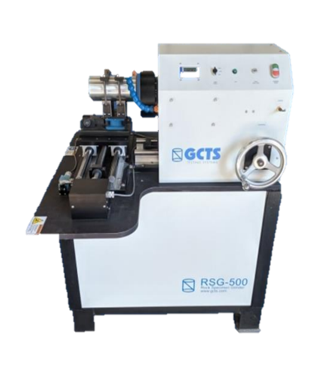
- end-face grinding machine.
The equipment enables the preparation of high-quality specimens for testing under:
- uniaxial compression;
- triaxial compression;
- indirect tensile testing.
Sample preparation ensures that specimens meet the requirements for testing on the automated RTR-2500 system.
Testing Equipment
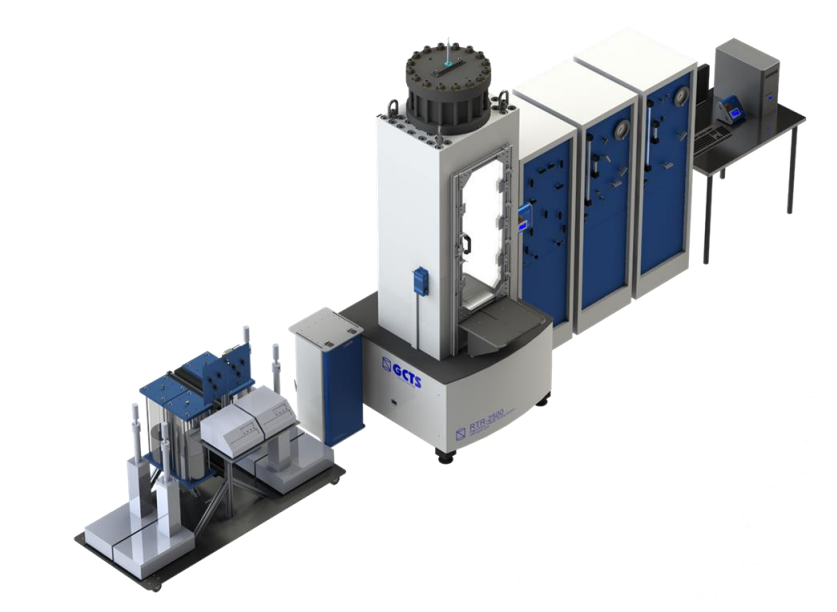
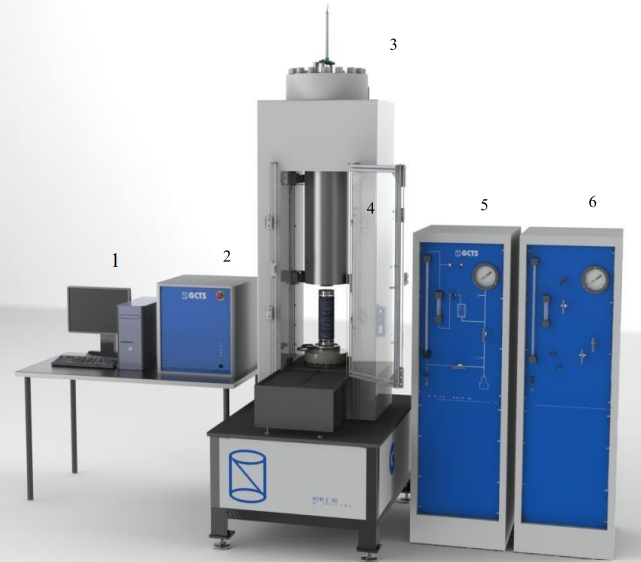
The key element of the laboratory is the automated servo-hydraulic RTR-2500 system, designed for comprehensive testing of rock materials.
The system enables:
- triaxial compression testing;
- uniaxial compression testing;
- hydraulic fracturing tests;
- studies over a wide temperature range (from ambient to +150°C);
- testing under controlled pressure up to 210 MPa (confining, pore, and borehole pressure);
- loading with an axial force of up to 2500 kN.
During testing, the following are determined:
- strength characteristics;
- elastic moduli (dynamic and static);
- deformation properties of rocks.
Laboratory Equipment
- Core drilling machine (core sampling machine)
- Laboratory cutting machine
- End-face grinding machine for samples
- RTR-2500 automated system
|
|
Core drilling machine (core sampling machine) |
|
|
Laboratory cutting machine |
|
|
End-face grinding machine for samples |
|
|
Automated servo-hydraulic system for testing rock specimens under triaxial compression, with the capability to simulate various stress–strain conditions, including uniaxial compression, supplied as a complete RTR-2500 system |
|
|
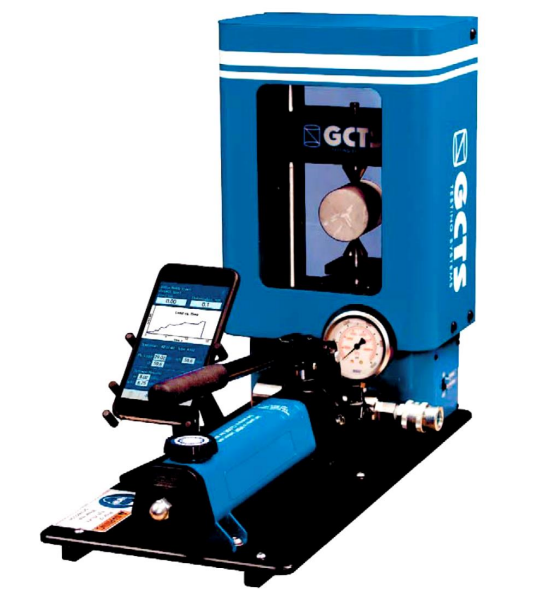
PLT-2W subsystem for testing rock materials under concentrated load for data verification in laboratory and field conditions |