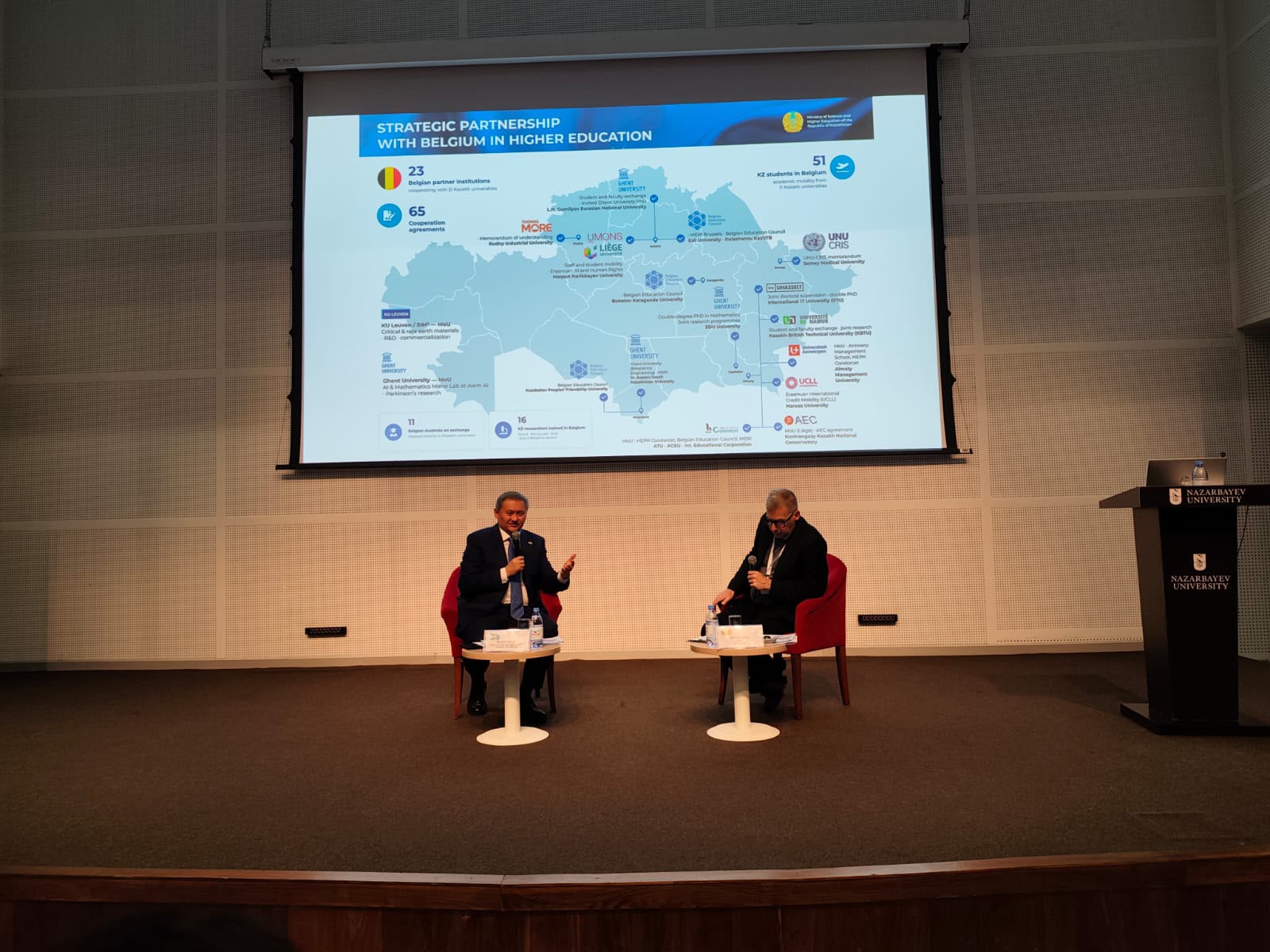
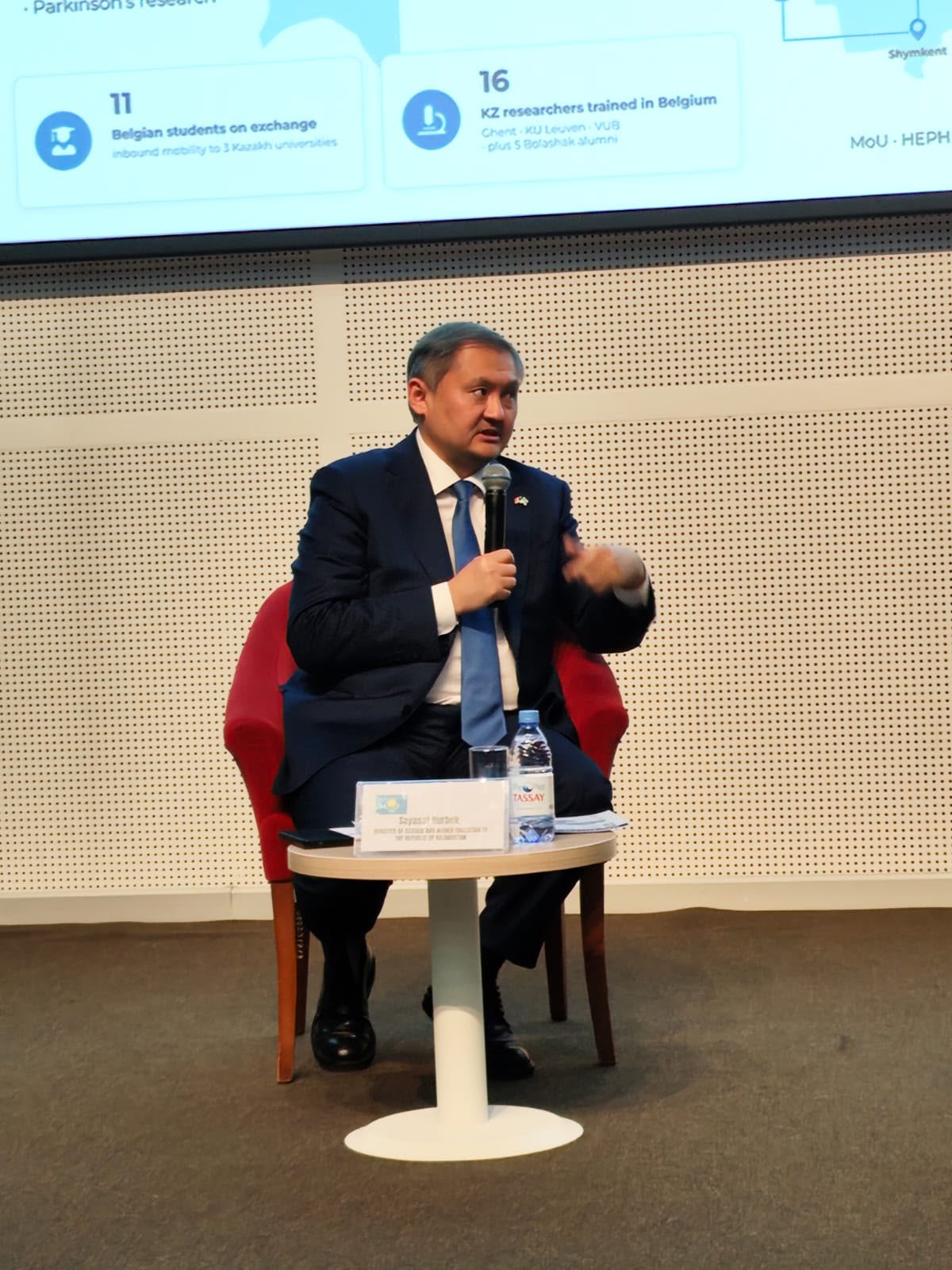
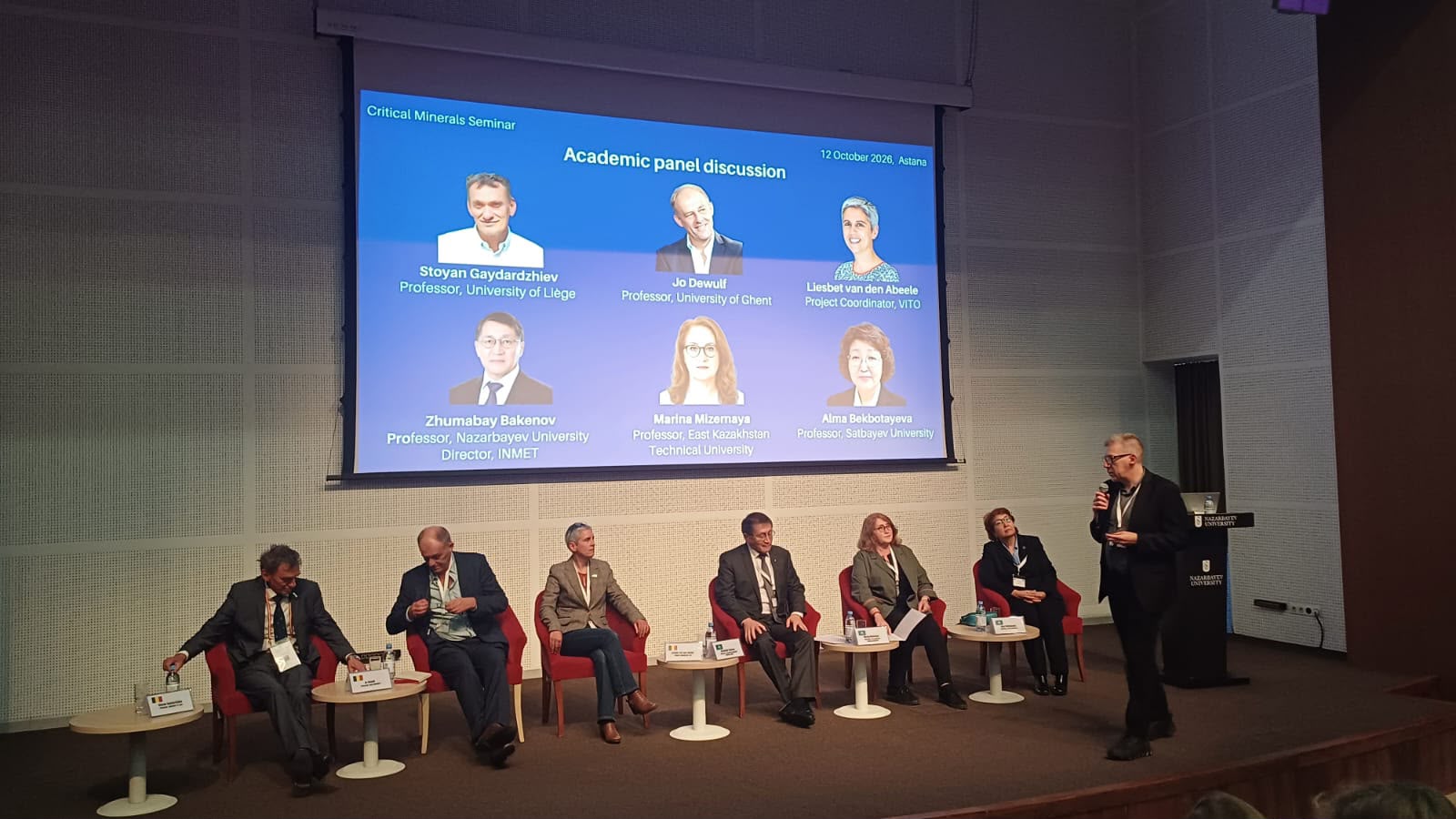
One of the highlights of this week was the participation of D. Serikbayev East Kazakhstan Technical University (EKTU) in the international Belgium-Kazakhstan Critical Minerals Seminar, held on October 12 at Nazarbayev University in Astana. The event brought together representatives of academia, industry, and government institutions from Kazakhstan and Belgium to discuss prospects for cooperation in the field of critical mineral resources. Professor Marina Mizernaya from the School of Earth Sciences was among the speakers at an academic panel discussion dedicated to advancing joint scientific research between the two countries.
Together with colleagues from the University of Liège (Université de Liège), Ghent University, the Belgian research organization VITO, and Kazakhstani universities, participants explored opportunities to combine scientific expertise, develop mineral processing technologies, and strengthen cooperation with industry. Professor Mizernaya presented the scientific potential of East Kazakhstan, emphasizing that the region possesses not only significant mineral resources but also well-established scientific schools, modern research infrastructure, and decades of experience in studying rare-metal deposits.
Particular attention was paid to the geological assessment of critical elements and their recovery from complex ores and accumulated industrial waste. Discussions also addressed joint pilot research projects with industrial enterprises, the development of networks of specialized research teams, and the training of young scientists, including through the Industrial PhD model. Importantly, cooperation with Belgian colleagues from the University of Liège is already progressing through joint research activities.
EKTU is currently undertaking extensive work in this field. The University is implementing the major research grant BR24992854, "Development and Implementation of Competitive Science-Based Technologies to Ensure the Sustainable Development of the Mining and Metallurgical Industry of East Kazakhstan Region." The programme brings together research in geology, mineral exploration, comprehensive processing of mineral resources and industrial waste, the development of new materials, and the reduction of environmental impacts.
Particular emphasis is placed on the practical application of research results, specifically the development of technologies that can meet the needs of mining and metallurgical enterprises. This close interaction between science and industry enables the translation of scientific findings into concrete technological solutions.
Another important area of international cooperation is EKTU's participation in the Horizon Europe TiBeRIUM project, which focuses on developing sustainable technologies and production value chains for titanium and beryllium. The project brings together 25 organizations from 10 countries, including universities, research centers, and industrial enterprises across Europe and Central Asia. Among the partners are the Belgian institutions KU Leuven and the University of Liège (Université de Liège).
Participation in such international consortia enables our researchers to conduct joint studies, exchange knowledge and expertise, adopt advanced technologies, and develop solutions with potential industrial applications. It also creates new opportunities for early-career researchers and strengthens the University's position within the international scientific community.
On October 14, the Institute of Critical Materials and Sustainable Metallurgy is scheduled to open in East Kazakhstan. This represents an important step towards strengthening the region's research infrastructure and expanding international cooperation.
The new Institute will create additional opportunities to bring together geologists, materials scientists, mineral processing specialists, and industrial partners. It is essential that existing scientific expertise and research infrastructure serve as a foundation for joint projects, the testing of new technologies, and the training of young researchers. This approach will enable more effective use of accumulated scientific experience and foster cooperation with leading international research institutions.
East Kazakhstan has significant potential for advancing research and technological development in the field of critical materials. The region is home to well-established scientific schools, experienced researchers, and a growing generation of young scientists.
Our shared objective is to bring together scientific expertise, international experience, and industrial capabilities to transform promising research into practical technologies and real-world industrial applications.
We are confident that cooperation with our Belgian colleagues, participation in Horizon Europe projects, and the development of the new Institute will create additional opportunities for collaborative research, the training of highly qualified researchers, and the technological advancement of East Kazakhstan and the country as a whole.